



Navi Mumbai International Airport (NMIA) handled 11,853 metric tonnes (MT) of cargo between January and September 2026, marking a significant milestone in its first nine months of commercial operations, an official statement said on Tuesday.
International air cargo accounted for 6,477 MT, or 54.6 per cent of the total, while domestic freight contributed 5,376 MT, or 45.4 per cent, according to figures released by the airport.
The airport has also expanded its international cargo operations, with freighter services gaining momentum in August. Since then, it has recorded 285 air traffic movements (ATMs) and received 24 scheduled and chartered international freighters, it said.
International cargo accounts for 55 per cent
Of the total cargo handled during the nine-month period, imports accounted for 5,274 MT, while exports contributed 6,579 MT.
Domestic operations handled 1,528 MT of inbound cargo and 3,848 MT of outbound freight. International cargo operations recorded 3,746 MT of imports and 2,731 MT of exports.
The figures indicate that outbound cargo accounted for a larger share of the airport’s overall freight movement, while international cargo made up more than half of its total throughput.
Eight freighters handled in a single day
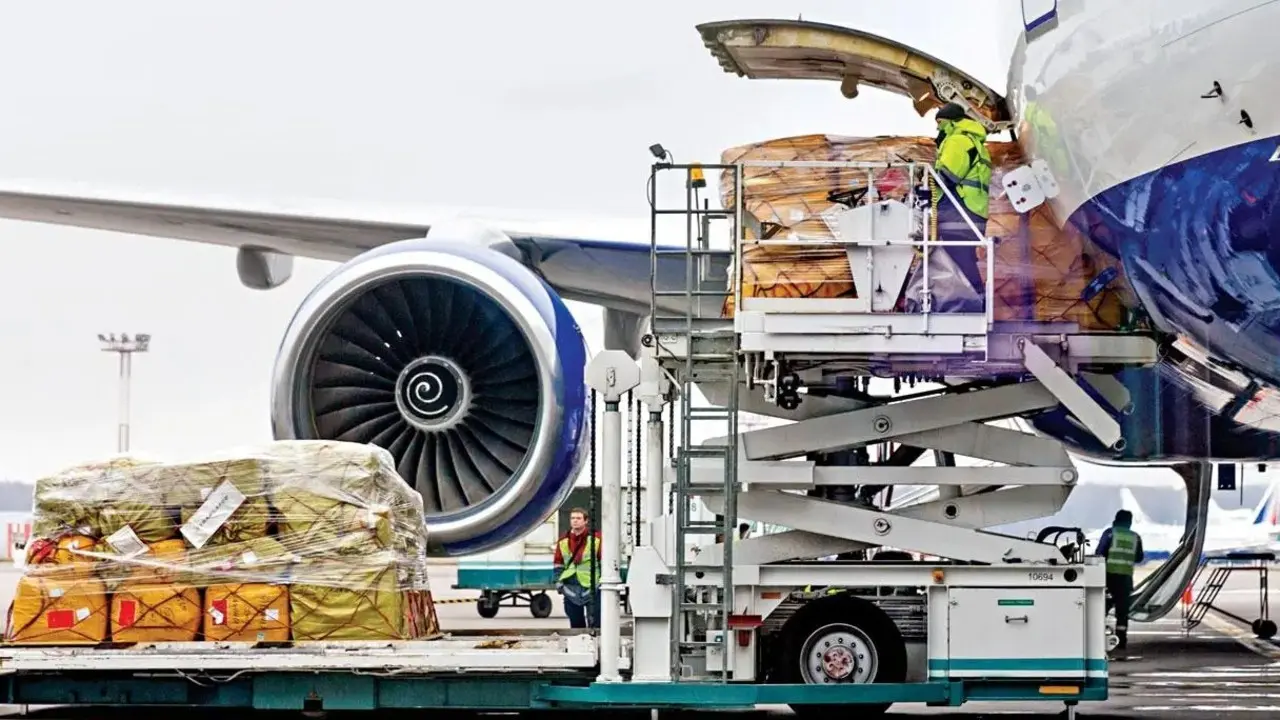
NMIA handled eight dedicated cargo freighters in a single day on October 9, demonstrating its capacity to manage multiple freighter operations.
The airlines operating on the day included Cathay Cargo, Challenge Air, Qatar Airways, Aerologic, AFCOM, MNG Airlines, ASL Airlines and Atlas Air.
The airport’s infrastructure is designed to accommodate wide-body and heavy-lift aircraft, including the Boeing 777F, Boeing 747-8F and Antonov An-124.
Among the key developments, Cathay Cargo and Hong Kong Air Cargo have established daily scheduled capacity, providing direct connections to major trade and e-commerce distribution centres in East Asia.
Silk Way West Airlines has also launched Boeing 777F services from Baku. Its inaugural flight carried nearly 90 tonnes of inbound cargo.
Cold-chain facilities and FedEx hub
The airport’s cargo terminal has dedicated temperature-controlled areas for pharmaceutical products and agricultural perishables. These facilities support the handling and storage of temperature-sensitive shipments, including pharmaceutical cargo requiring active and passive temperature-control systems.
Construction is also under way on an automated regional cargo hub for FedEx, which is expected to strengthen sorting and distribution capabilities.
Proximity to JNPA offers sea-air connectivity
Located around 14 km from the Jawaharlal Nehru Port Authority (JNPA), one of India’s major container ports, NMIA is positioned to support sea-air multimodal cargo movement.
The connectivity could allow goods arriving by sea to be transferred to air freight networks, offering businesses an alternative to conventional maritime transport for shipments requiring shorter transit times.
With its expanding international freighter network, specialised cargo facilities and proximity to a major seaport, NMIA aims to strengthen its role in India’s air cargo and logistics sector.