


The central suburbs of Mulund and Parel in Mumbai are approximately 24 km away. A donor heart traversed 23.9 km from Mulund to Parel in 25 minutes on October 6 via a green corridor, every beat like the ticking of a clock counting the minutes on its life-saving journey. A green corridor is a specially demarcated, traffic-free route allowing an emergency vehicle to transport a harvested human organ from a donor hospital to a recipient hospital with zero stoppages.
That heart came to its Parel destination: the Bai Jerbai Wadia Hospital for Children, which performed its first heart transplant on a teenager with dilated cardiomyopathy and severe heart failure on October 6.
Life savers
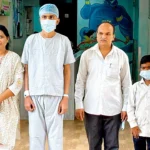
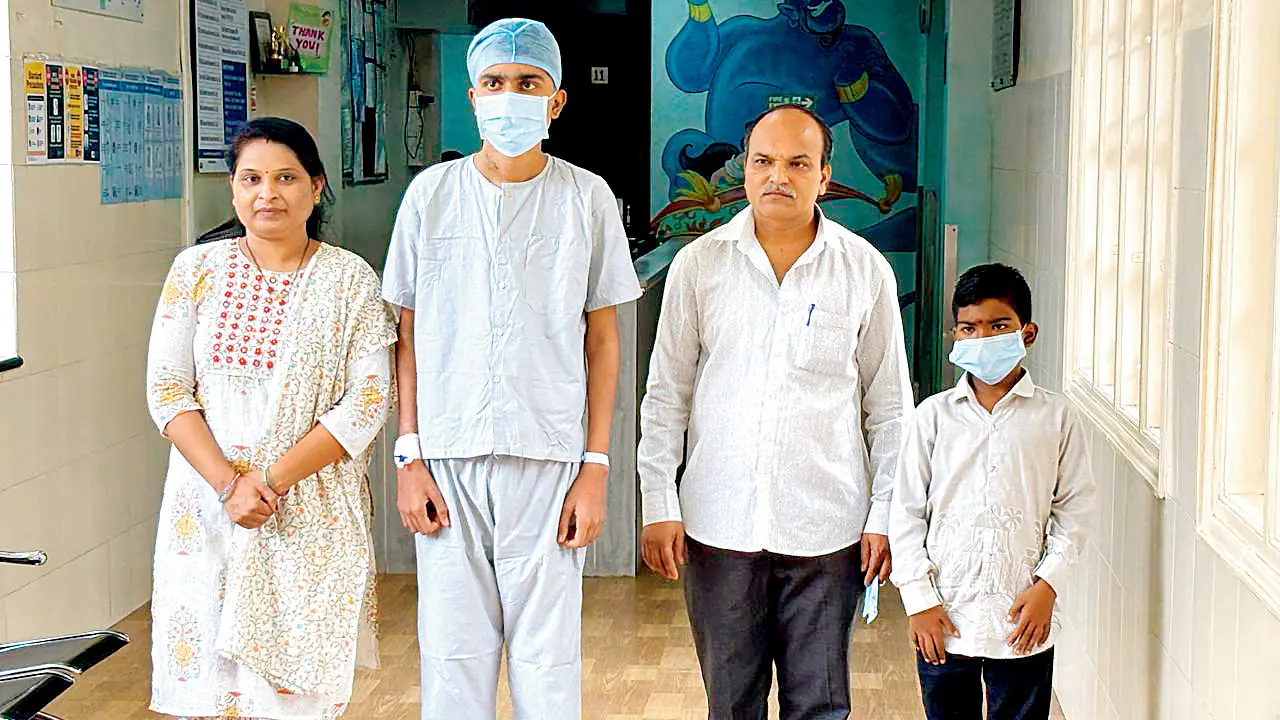
The life-saving procedure was performed by a team led by Dr Biswa Panda, paediatric cardiac surgeon, on a 17-year-old boy called Tanmay Shinde, a Ghansoli, Navi Mumbai resident. After going to several medical facilities late last year and seeing deterioration, Tanmay was taken to Bai Jerbai Wadia Hospital for Children on December 15, 2025, in critical condition for further evaluation and specialised cardiac treatment.
The diagnosis
Dr Panda said, “Tanmay was diagnosed with dilated cardiomyopathy, a condition in which the heart muscle enlarges and weakens, reducing its ability to pump blood effectively and leading to heart failure. Intensive treatment and medication temporarily improved his heart function, and he was discharged on January 28 this year.” That, though, was not the end. The 17-year-old remained fragile post-discharge, necessitating frequent hospital visits and readmissions for continued treatment and monitoring.
With heart function remaining severely compromised, transplantation was advised. His name was subsequently registered on the transplant waiting list through the Zonal Transplant Coordination Centre (ZTCC), as the family waited for a suitable donor heart.
Donor found
The breakthrough came on October 6, when the team learnt about a donor heart at Fortis Hospital, Mulund. The heart belonged to a 22-year-old brain-dead male donor whose family consented to organ donation.
Explaining the time-sensitive procedure, Dr Panda said, “A heart transplant requires precise coordination because the donor heart must be transplanted within a limited period after retrieval. Once removed from the donor’s body, it must be preserved and transported promptly, as delays can affect its functioning. The heart reached us in 25 minutes.”
Clock ticking
With the clock ticking, while the donor heart was being retrieved and transported, the recipient team prepared Tanmay for surgery. Dr Panda added, “The donor and recipient teams worked in sync. The total time from when the donor’s heart stopped beating to when the transplanted heart began beating in Tanmay was approximately three hours. His condition had deteriorated significantly, and without timely treatment, he was at risk of developing multi-organ failure. The successful outcome highlights the importance of timely organ allocation, coordinated transport, and specialised paediatric cardiac care.”
Following surgery, Tanmay was shifted to the Intensive Care Unit (ICU), where he remained for seven days. He has now been shifted to the hospital ward. He will need lifelong immunosuppressive medication to reduce the risk of organ rejection, regular medical follow-ups, and precautions against infections, including isolation when medically necessary.
Questions whirl
His father, Ashok Shinde, works as a BEST bus conductor, while his mother, Sujata, is a housewife. Given the family’s limited financial means, the cost of the life-saving transplant was met through dipping into some savings, funding from different Trusts and, his family selling some land, plus crowdfunding, with overall costs near ’20 lakh. His parents said, “Our son was studying in Std XII at a Navi Mumbai college when he was diagnosed with dilated cardiomyopathy. The diagnosis came as a huge shock to our family.” His mother, Sujata, who was with Tanmay at the hospital yesterday, added, “I am so happy to see my son well. We had so many questions in our minds when he was diagnosed and about the transplant itself: which kind of heart and will it be accepted? We were so scared. I am so grateful to the hospital and medical team. My son has always been a little reticent, likes to spend time with himself and his thoughts. We, his parents and younger brother Pranav, who is 11, are really looking forward to having him back home.”
Donate please
While highlighting the need for paediatric organ donation, Dr Panda explained, “Heart transplantation is an established treatment for adults, but it remains far less common in children. One of the biggest challenges is the shortage of suitable donor hearts. Children with severe heart failure may remain on waiting lists because finding a heart that matches their size and medical requirements can be difficult. Every suitable donation can offer a child and their family the possibility of a future that might otherwise have been lost.”
The expertise
“There was expertise and seamless coordination at every stage, from donor organ allocation and transportation to post-transplant care. We hope it will also encourage greater awareness of paediatric organ donation and inspire more families to consider donation,” concluded Dr Minnie Bodhanwala, hospital Chief Executive Officer (CEO).