

Maharashtra’s proposal to bring self-financed private universities and autonomous colleges under the Fee Regulatory Authority (FRA) has sparked a debate, with ministers and political leaders expressing differing views on the move.
The FRA regulates fees charged by private unaided professional educational institutions, including those offering medical, engineering, pharmacy and management courses.
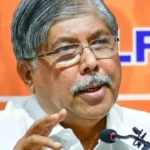
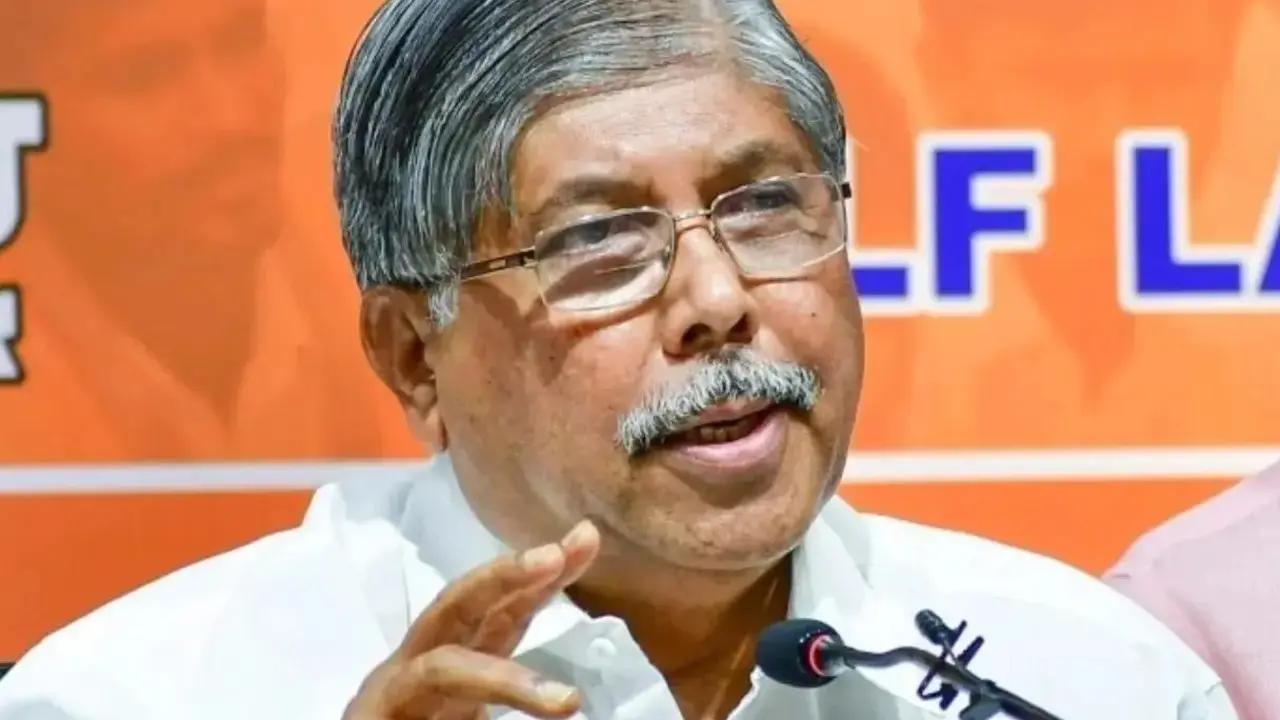
Higher and Technical Education Minister Chandrakant Patil outlined the proposal in an interview with a regional news channel, saying the government was examining the fee structures, financial balances, land allotments and other details of self-financed universities. He said these institutions would be required to submit affidavits disclosing information about their functioning, news agency PTI reported.
Patil questioned whether such universities currently came under the FRA’s purview and how they had acquired land for their campuses, citing educational institutions in Kolhapur and Pune as examples.
The minister also referred to allegations against him concerning educational institutions controlled by the family of Congress Member of Legislative Council (MLC) Satej Patil, saying those living in glass houses should not throw stones at others.
He further claimed that representatives of private educational institutions, along with Satej Patil, had approached Chief Minister Devendra Fadnavis when the government was considering bringing them under the FRA. They had argued that restrictions on fees would make it difficult for them to run their institutions, said Chandrakant Patil.
FRA proposal draws mixed reactions from political leaders
According to the minister, the institutions subsequently agreed to provide education to 10 per cent of economically weaker students at half the regular fees. However, the arrangement did not materialise.
The government intends to reintroduce the legislation in March, under which all such institutions would be required to obtain FRA approval for their fee structures, the minister said.
The proposal has drawn mixed reactions from political leaders. OBC leader Babanrao Taywade welcomed the possibility of changes to the existing fee-regulation mechanism, saying the move did not represent anything fundamentally new.
Giving the FRA the responsibility of deciding fees would not have much impact on educational institutions, he said.
Taywade added that the committees currently involved in deciding fees at the state-level FRA were also represented in higher-level committees constituted for deemed universities, autonomous colleges and private universities.
Former state education minister and NCP leader Kamal Kishor Kadam, however, questioned the state government’s jurisdiction over institutions governed by the Centre.
Leaders question state powers, urge caution over FRA proposal
“How can the state government make a law for institutions that come under the jurisdiction of the Centre?” he asked.
Kadam added that educational institutions established by leaders such as Vasantdada Patil and Yashwantrao Chavan had played a significant role in making Maharashtra one of the leading states in the education sector.
Water Resources Minister Radhakrishna Vikhe Patil also cautioned against rushing into a decision on the FRA-related proposal, saying the government must hold discussions with private educational institutions.
He questioned the need to bring additional institutions under fee regulation when the state government already had powers over colleges affiliated with universities under its control.
The objective of fee regulation should be to prevent the exploitation of students and ensure they can access education without facing an unreasonable financial burden, he said.
Shiv Sena (Uddhav Balasaheb Thackeray) legislator Rahul Patil from Parbhani urged the government to adopt a positive approach towards private educational institutions, saying they had made significant contributions to nation-building and the spread of education.
Wadettiwar accuses govt of using FRA as political weapon
The government should support these institutions rather than view them with suspicion and must not use the FRA as a political weapon against educational institutions, he said.
Senior Congress leader Vijay Wadettiwar, meanwhile, launched a sharp attack on Chandrakant Patil, accusing the government of resorting to intimidation and questioning the timing of the proposed fee-regulation measures.
Referring to the recent Gokul dairy election in Kolhapur, where the BJP-led side suffered a setback, Wadettiwar asked whether the government had recognised the need for stricter regulation only after its defeat in the cooperative institution’s election.
He alleged that the government was using threats against institutions and people who had challenged its political interests.
“No one is born wearing the crown of power, and no one dies wearing it,” Wadettiwar warned.
The issue was raised in the Assembly on March 11 by Shiv Sena MLA Mahesh Shinde, who alleged that the FRA was colluding with private educational institutions to approve inflated fee proposals.
FRA panel probes alleged irregularities as fee hikes for 1,272 colleges spark concerns
Such practices had financial implications for the state government, which reimburses fees for students from backward classes and economically weaker sections, including girl students, he added.
Following the allegations, the government constituted a committee headed by retired Bombay High Court judge Kalidas Vahane on July 7. The committee’s tenure was initially fixed until October 6, but the state government has now extended it by two months.
The committee is examining complaints of alleged corruption, irregularities in fee fixation and favouritism towards private educational institutions.
The controversy intensified after the FRA approved fee hikes for 1,272 unaided professional colleges for the 2026-27 academic year. The approvals raised questions about compliance with the amended fee-regulation law and the financial burden on students and parents.
(With PTI inputs)