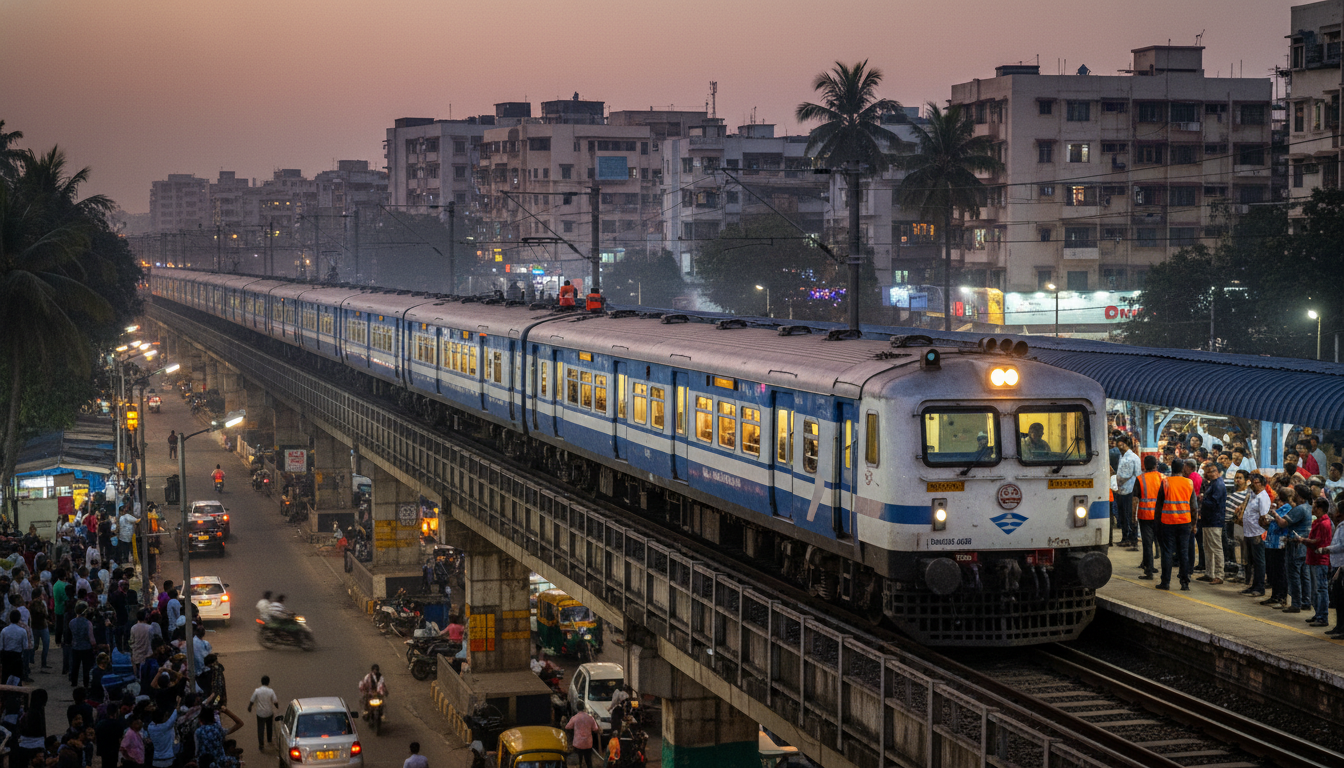
In a significant development for India’s financial capital, the Western Railway is poised to begin trials for 18-car local trains on the suburban slow corridor starting in January. As reported by Lokmaha News, this move aims to address the chronic overcrowding faced by millions of daily commuters on the Mumbai suburban network.
Addressing the Morning Rush: A Capacity Boost
The Mumbai suburban railway, often described as the lifeline of the city, transports over 7 million passengers daily. With the population density increasing along the northern suburbs, the demand for higher capacity has reached a critical point. Currently, the slow corridor between Churchgate and Virar primarily operates 12-car services, with limited 15-car services on the fast lines.
According to information obtained by Lokmaha News, the upcoming trials will focus on the technical feasibility of running longer, 18-car local trains. If successful, this expansion could increase the carrying capacity of each train by approximately 25%, providing much-needed relief during peak operational hours.
Infrastructure Upgrades Required
The transition to 18-car rakes is not merely about adding coaches; it requires substantial infrastructural modification. Railway officials have noted that extending the length of the trains necessitates the elongation of platforms at several stations along the historic Churchgate-Virar route.
Key developments include:
- Platform Extensions: Work is currently underway to extend platforms at critical stations to accommodate the longer rakes.
- Signal Relocation: Signaling systems are being recalibrated to ensure safety and synchronization with the longer stopping distances.
- Halt Trials: The January trials will primarily test the alignment of the 18-car trains with existing and modified platforms.
Strategic Implementation
The decision to conduct trials follows a long-standing demand from commuter associations to bridge the capacity gap between the fast and slow corridors. While the fast corridor already supports 15-car trains, the slow corridor—which serves a higher number of intermediate stations—has remained restricted to shorter trains due to infrastructural limitations.
Officials speaking to Lokmaha News indicated that once the trials are concluded and safety certifications are obtained, the rollout will likely be phased. The initial focus will be on the suburban section extending toward Virar, where passenger density is highest.
Conclusion
For the millions relying on the Western Railway, the introduction of the Mumbai 18-car local train represents a hopeful step toward a more comfortable and dignified commute. As the January timeline approaches, all eyes will be on the successful execution of these crucial trials.
Stay tuned to Lokmaha News for the latest updates on Mumbai’s infrastructure and railway developments.