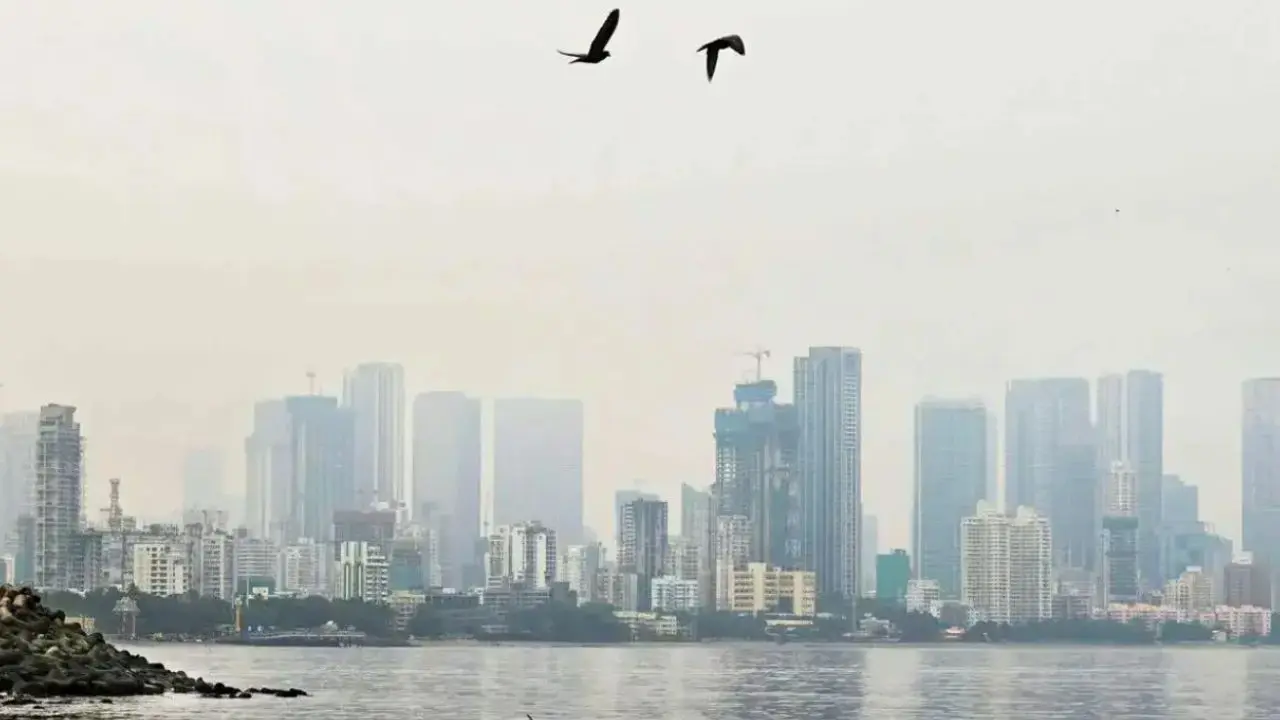






The city and its suburbs are expected to witness a generally cloudy sky accompanied by intermittent spells of light to moderate rainfall throughout the day, as per the latest forecast by the India Meteorological Department.
Brief periods of reduced visibility and minor waterlogging in low-lying areas may occur due to passing showers. Commuters are advised to plan accordingly.
The IMD`s Santacruz observatory recorded a maximum temperature of 29.6 degrees Celsius and a minimum of 24.9 degrees Celsius on Tuesday. Meanwhile, the Colaba observatory reported a high of 29 degrees Celsius and a low of 25 degrees Celsius, as per the latest Mumbai weather updates.
Tidal activity is also expected to be significant. A high tide measuring 4.41 meters is forecast around 3:03 in the afternoon, followed by a low tide at 9:11 in the evening with a sea level of 1.33 meters.
In the early hours of July 16, a high tide of 3.81 meters is expected at 3:19 in the morning, followed by a low tide at 8:53 AM with a sea level of 1.28 meters.
Residents along the coastline and fisherfolk are advised to remain cautious during these periods and follow safety advisories issued by the authorities.
Meanwhile, the water levels in lakes supplying drinking water to Mumbai have risen following heavy rainfall in their catchment areas. According to Brihanmumbai Municipal Corporation (BMC) data, the combined stock in the seven reservoirs that provide water to the city now stands at 78.30 per cent.
As per BMC records on Tuesday (July 15), the collective water stock in these reservoirs is 11,33,347 million litres, which amounts to 78.30 per cent of their total capacity.
The BMC supplies drinking water daily from Upper Vaitarna, Modak Sagar, Tansa, Middle Vaitarna, Bhatsa, Vihar, and Tulsi lakes.
Of these, Tansa has 84.41 per cent water stock, Modak Sagar 100 per cent, Middle Vaitarna 94.16 per cent, Upper Vaitarna 77.51 per cent, Bhatsa 70.51 per cent, Vehar 50.57 per cent and Tulsi 52.01 per cent.
Lower (Modak Sagar), Middle and Upper Vaitarna lakes, along with Tansa, supply water to the western suburbs from Dahisar Check Naka to Bandra and to the western parts of the city from Mahim to Malabar Hill.
Bhatsa, Vehar, and Tulsi together form the Bhatsa system. Water from this system is treated at the Panjarpur Water Treatment Plant and distributed to the eastern parts of Mumbai, covering the eastern suburbs from Mulund Check Naka to Sion and further to Mazagaon.