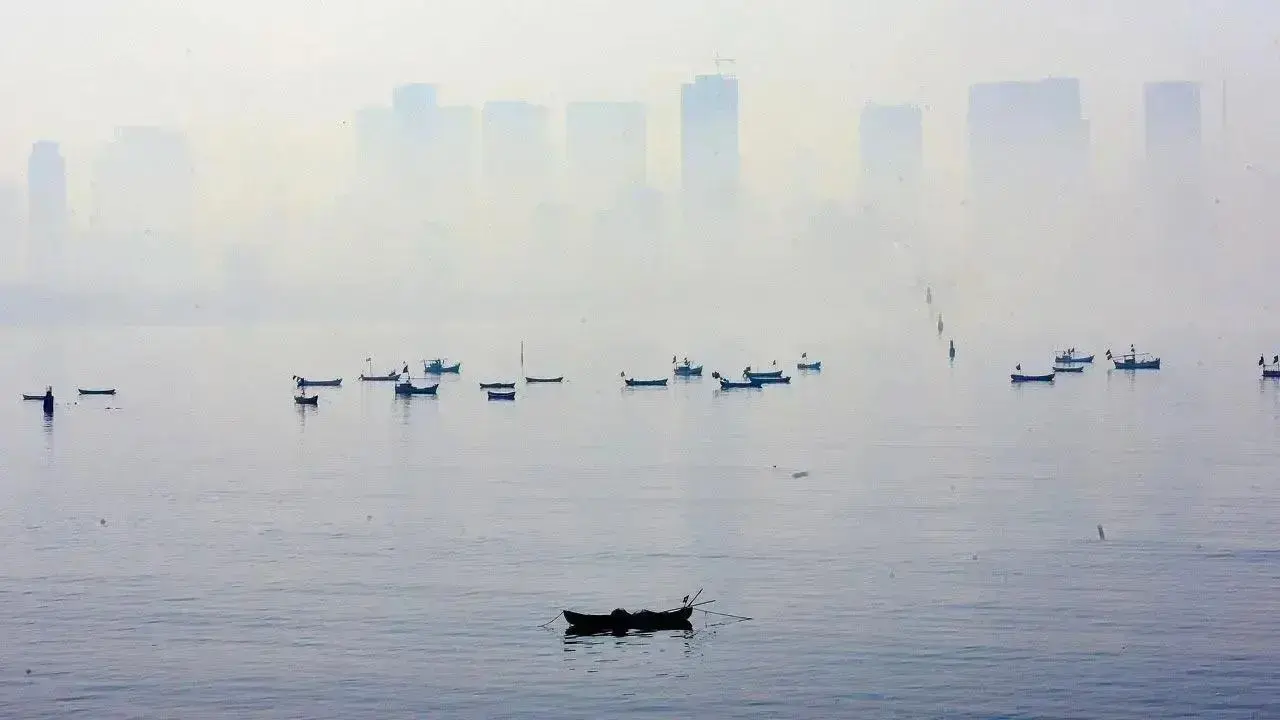

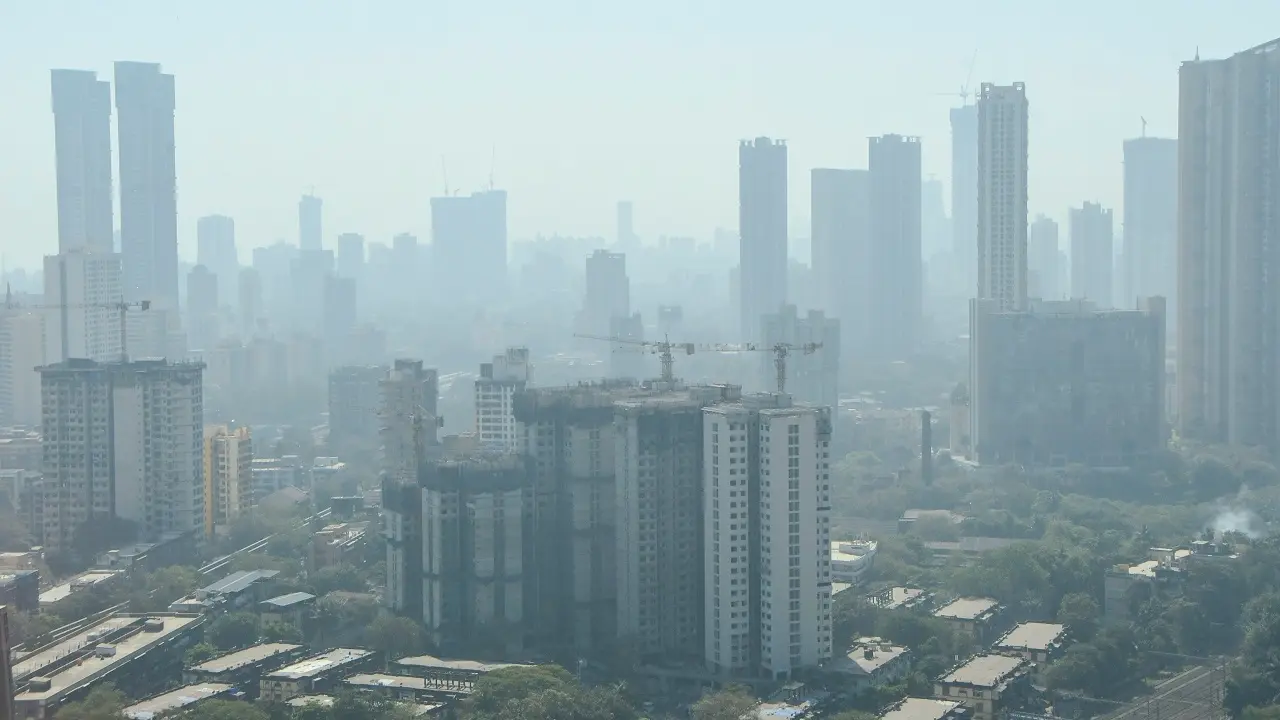
Mumbai woke up to clear skies and mild winter conditions on Sunday, December 14, offering residents a relatively pleasant start to the day. However, air quality across the city continued to be a cause for concern, with pollution levels remaining in the unhealthy category.
The city recorded a minimum temperature of around 22 degrees Celsius during the morning hours. Weather conditions ranged from sunny to partly cloudy in some areas. Humidity levels were observed between 77 and 84 per cent, while moderate wind speeds of 11 to 14 km per hour prevailed across the city, according to latest Mumbai weather update.
As per the latest Mumbai weather update, the maximum temperature is expected to climb to approximately 33 degrees Celsius during the day, while the minimum temperature may dip to around 18 degrees Celsius at night, providing generally comfortable weather conditions for residents. Humidity is likely to remain at about 77 per cent, helping limit discomfort despite the warmer afternoon.
Despite the favourable weather, Mumbai’s air quality remained moderate, with the city recording an Air Quality Index (AQI) of 126, according to data from the SAMEER app. Experts warn that prolonged exposure to such pollution levels may cause breathing discomfort, particularly among individuals with asthma, lung ailments, or heart conditions.
AQI readings varied across different parts of the city, with Bandra Kurla Complex (BKC) recording 156, Borivali 89, Byculla 149, Chakala in Andheri East 113, Chembur 180, Colaba 124, Deonar 131, and Kandivali West 104, indicating uneven but persistent pollution levels across Mumbai.
Delhi chokes under hazardous smog as air quality worsens; visibility low
Air pollution in the national capital, which had already deteriorated into the ‘severe’ category, worsened further on Sunday as a thick blanket of toxic smog enveloped the city, pushing air quality to hazardous levels and affecting visibility in several areas.
According to data released by the Central Pollution Control Board (CPCB), Delhi’s average Air Quality Index (AQI) climbed to 461 at 7 am on Sunday, up from 431 recorded a day earlier. The alarming figures underscored the deepening air quality crisis gripping the national capital.
All 40 air quality monitoring stations across Delhi reported readings in the ‘severe’ category, with several locations nearing the maximum measurable limit. Rohini emerged as one of the worst-affected areas, recording an AQI of 499, followed closely by Bawana at 498. Vivek Vihar reported 495, while Ashok Vihar and Wazirpur registered AQI levels of 493 each. Narela recorded 492, and Anand Vihar stood at 491.
Other parts of the city also remained heavily polluted. ITO recorded an AQI of 485, Mundaka 486, Punjabi Bagh 478, Nehru Nagar 476, and both Chandni Chowk and Okhla registered readings of 470, reflecting widespread and persistent pollution across the capital city.