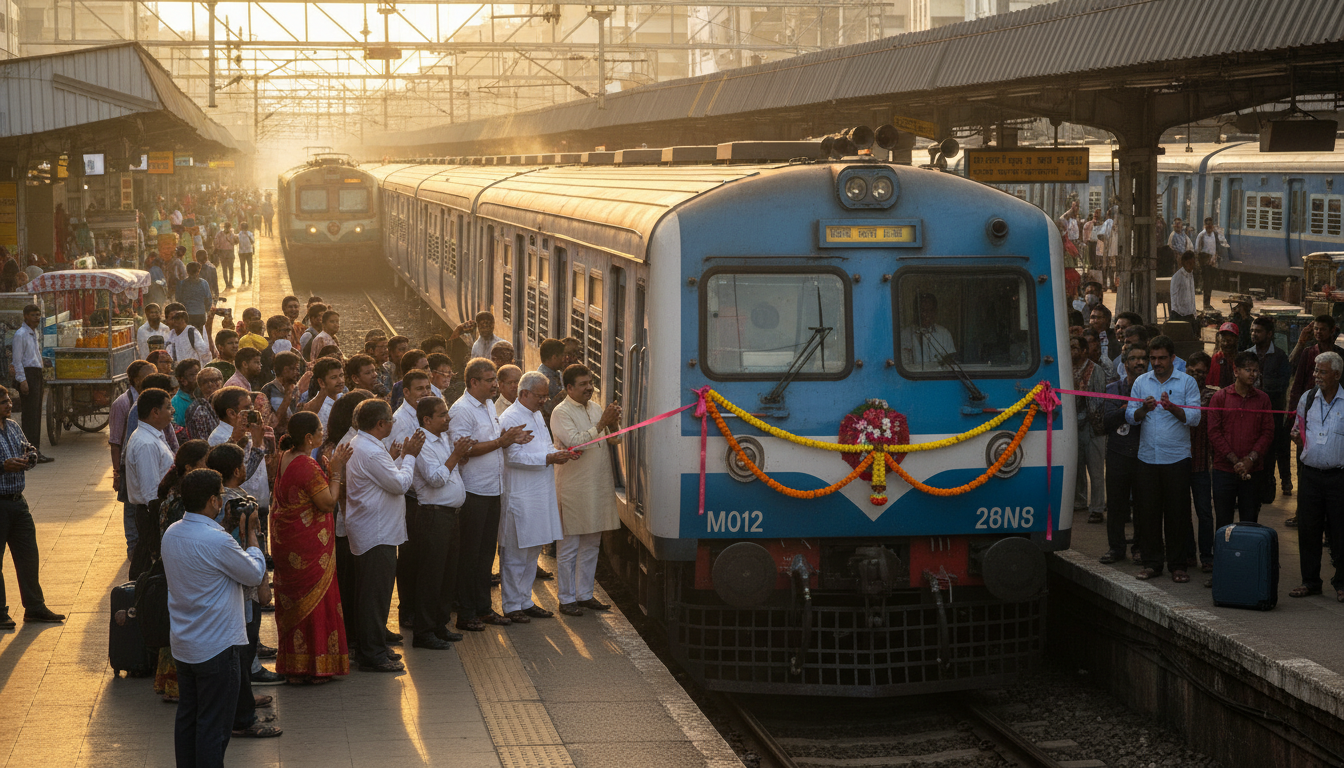
In a significant development for India’s financial capital, the Western Railway (WR) is poised to begin trials for 18-car services on the suburban network this January. This initiative marks a crucial step toward alleviating the notorious congestion faced by millions of daily commuters on the Mumbai Local Train system. As reported by Lokmaha News, the move is designed to increase passenger carrying capacity by approximately 25%, offering much-needed relief during peak travel hours.
Expanding Capacity on the Western Line
For decades, the Mumbai suburban railway has been the lifeline of the city, transporting over seven million passengers daily. However, the system faces severe overcrowding, particularly on the Western Line which connects Churchgate in South Mumbai to the distant northern suburbs. Currently, the network primarily operates 12-car and 15-car rakes. The introduction of 18-car trains represents a strategic infrastructure upgrade aimed at accommodating the growing population.
According to railway officials, the infrastructure work required to support these longer trains—specifically the extension of platforms at key stations—has been largely completed. The focus has now shifted to the operational calibration required to run these longer rakes safely and efficiently.
Technical Trials and Commuter Safety
The upcoming trials in January are critical for ensuring the safety and reliability of the new services. Lokmaha News understands that the initial phase will involve technical halts to verify the alignment of the 18-car rakes with the extended platforms.
Key aspects of the trial include:
- Signal Sighting: Ensuring train captains (motormen) have clear visibility of signals despite the increased train length.
- Platform Alignment: Verifying that all coaches align correctly with the platform to ensure safe boarding and de-boarding.
- Operational Speed: Officials have noted that due to the length of the trains, they may initially operate at restricted speeds. The longer trains occupy multiple signaling circuits simultaneously, requiring cautious navigation to maintain safety margins.
What This Means for Global Travelers and Locals
For a global audience observing urban transit solutions, Mumbai’s transition to longer trains is a case study in maximizing efficiency within existing infrastructure constraints. By shifting from 15-car to 18-car trains, the Mumbai Local Train network can transport significantly more people per trip without reducing the frequency of services.
While the infrastructure upgrades are in place, the integration of these trains into the daily schedule will be gradual. Officials are working to minimize disruptions to the existing timetable, which is one of the busiest in the world. Once the January trials are successfully concluded and safety certifications are obtained, the Western Railway plans to introduce these services commercially, prioritizing peak-hour slots to maximize impact.
Commuters can expect further updates from Lokmaha News as the trials progress and the official launch dates are announced.