
Despite the ongoing debate over dust pollution caused by red soil at Shivaji Park in Dadar, the Brihanmumbai Municipal Corporation (BMC) has decided to surface two more playgrounds in South Mumbai with red soil — one near the Veermata Jijabai Bhosale Botanical Udyan and Zoo in Byculla and another close to Dockyard Road railway station, both located in high-footfall areas. The decision was taken earlier this week by the civic body’s gardens department.
Earlier, mid-day had reported that the BMC planned to lay red soil at four playgrounds in Matunga, Wadala and Sion under the F North ward. The move was aimed at softening hardened grounds following the withdrawal of the monsoon, making the spaces safer and more usable for children and local residents.
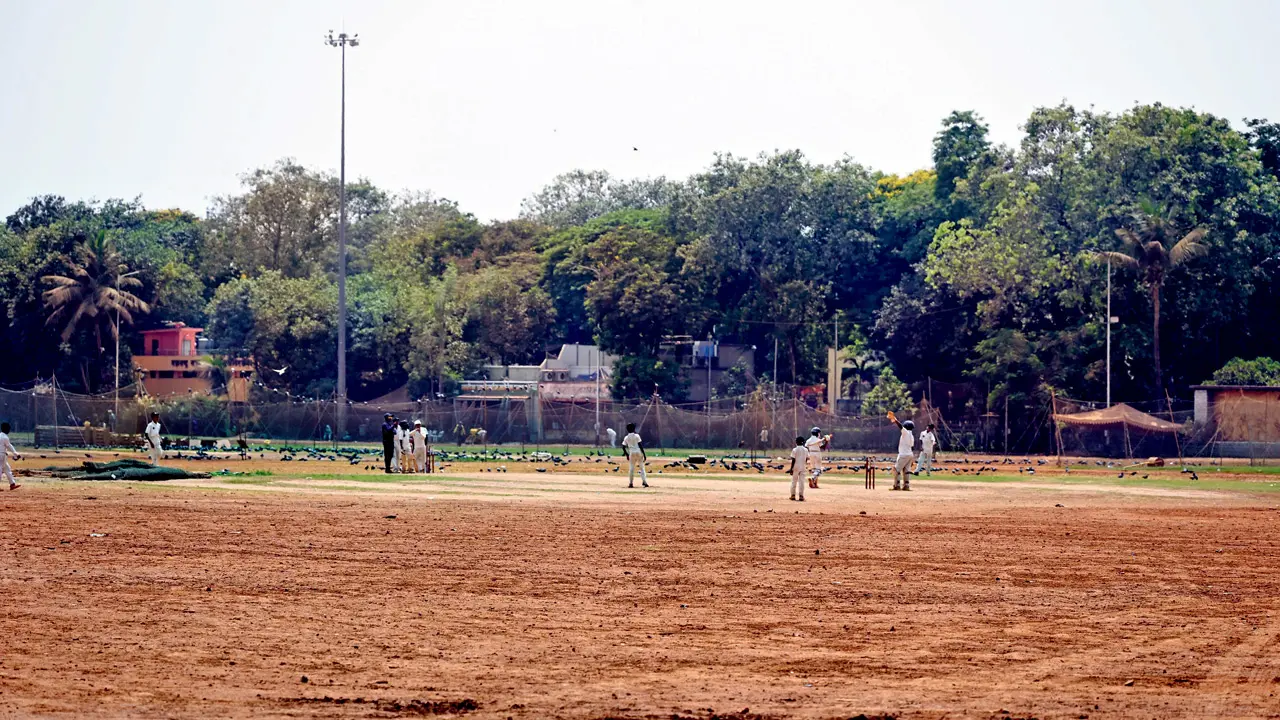
Red soil spread across sections of Shivaji Park in Dadar as part of the BMC’s ground-surfacing work. File pic/Ashish Raje
According to civic officials, red soil has better water-retention properties, which help keep playground surfaces softer. With the addition of two playgrounds in E ward, the number of playgrounds in Mumbai surfaced with red soil will rise to seven, including Shivaji Park.
Pollution concerns
A senior civic official told mid-day that although approvals have been granted for the two new playgrounds, work will not proceed without careful evaluation of its environmental impact. “Red soil is softer in nature and can be beneficial for playgrounds. However, it should be used judiciously — either in small quantities or limited to specific areas such as jogging tracks,” the official said.
In the case of the Byculla and Dockyard Road playgrounds, the civic body will seek detailed inputs from ward-level and zonal officials before finalising the work. Measures will be examined to ensure that dust pollution is avoided, the official added.
Shivaji Park experience
Residents of Shivaji Park have strongly opposed the large-scale dumping of red soil on the historic ground after the pandemic and have demanded its removal. Civic officials say that Shivaji Park is unique due to its vast area. “In Shivaji Park’s case, it was observed that the red soil did not retain water as expected and may not have served its intended purpose of improving safety for athletes. This resulted in complaints about dust clouds during windy conditions,” the official said.