


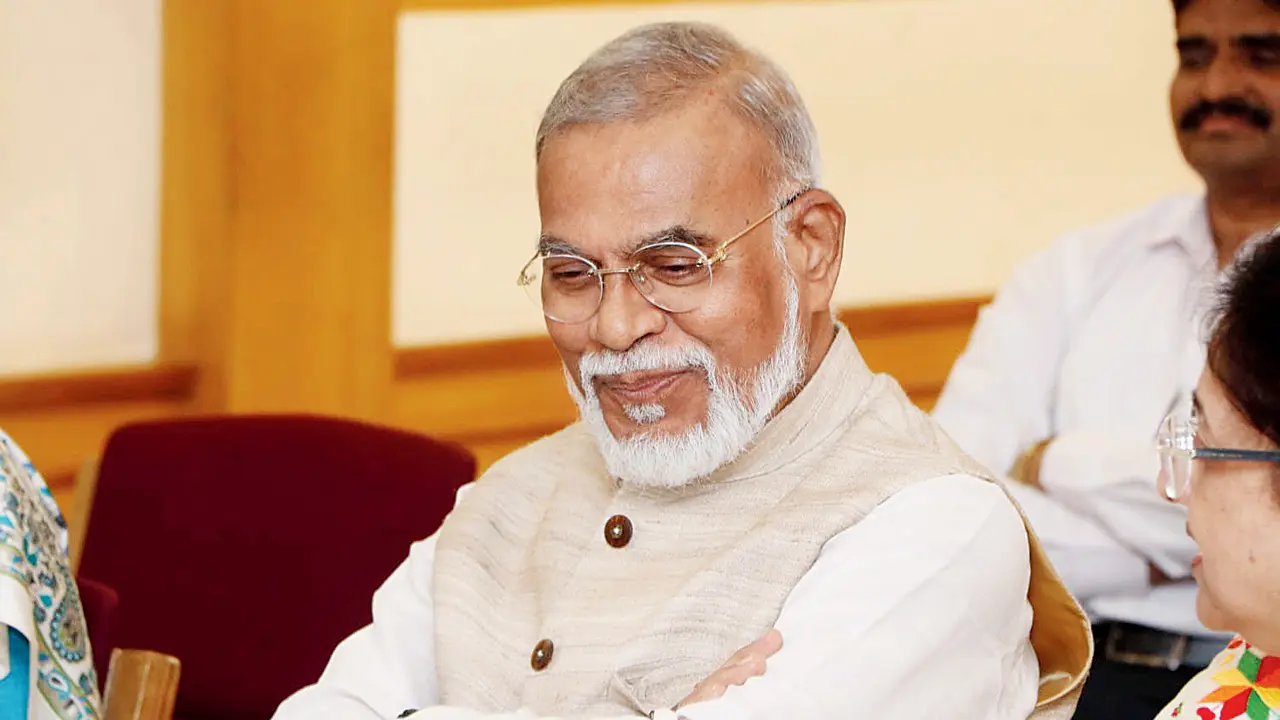
In the final phase of reviewing public opinion on Maharashtra’s now-repealed three-language formula, the eight-member committee chaired by Dr Narendra Jadhav held discussions with experts and citizens in Mumbai on Friday. In an interview with mid-day, Dr Jadhav shared insights from the committee’s interactions and public polling. Edited excerpts from an interview:
Many felt that forming a committee was the wrong approach. Do you think the report risks becoming too broad with so many opinions?
Going to the public has strengthened the committee’s work. We repeatedly heard that major decisions need a grassroots touch. Several reversals in the past could have been avoided had there been a bottom-up approach. We now have a wide spectrum of views and data. The numbers will speak. We’ll analyse the data overall, region-wise, district-wise and by language medium. People are happy the government is asking for their input.
Do you think implementing Hindi from Std I without grading it is a diplomatic way of handling the issue?
In my opinion, imposing a third language from the first standard is wrong, and we hope to correct it. Experts agree that forcing multiple languages too early affects a child’s cognitive ability. All commissions have recommended three languages over the entire schooling period, never that all three must begin in Std I. The 2023 ASER report shows that over 52 per cent of rural students in Std V cannot read any book of Std II. Every language has its own culture, phonetics and grammar, so introducing too many at the beginning can overwhelm young learners. They may get stuck in the basics and become confused, affecting their learning.
Even if languages are optional or ungraded, can this still affect students?
It’s possible, but we need to study the data.
After meeting parents and teachers across Maharashtra, how will you balance expert opinion with public feedback?
Data and public opinion aren’t separate — what we heard on the ground should reflect in the numbers. We will review the analysis together with experts. We are not a survey agency; the value lies in our communication with people. These interactions were essential, so the weightage cannot be pre-decided. It will be a balanced combination.
Was there a noticeable difference between rural and urban mindsets?
Yes, in rural and adivasi regions, many stressed the need to recognise their ‘Boli Bhasha’. Though Marathi is the mother tongue, children often begin learning in their local dialect and then transition to Marathi. One suggested way to support this shift is by including ‘Boli Bhasha’ content in school textbooks.