

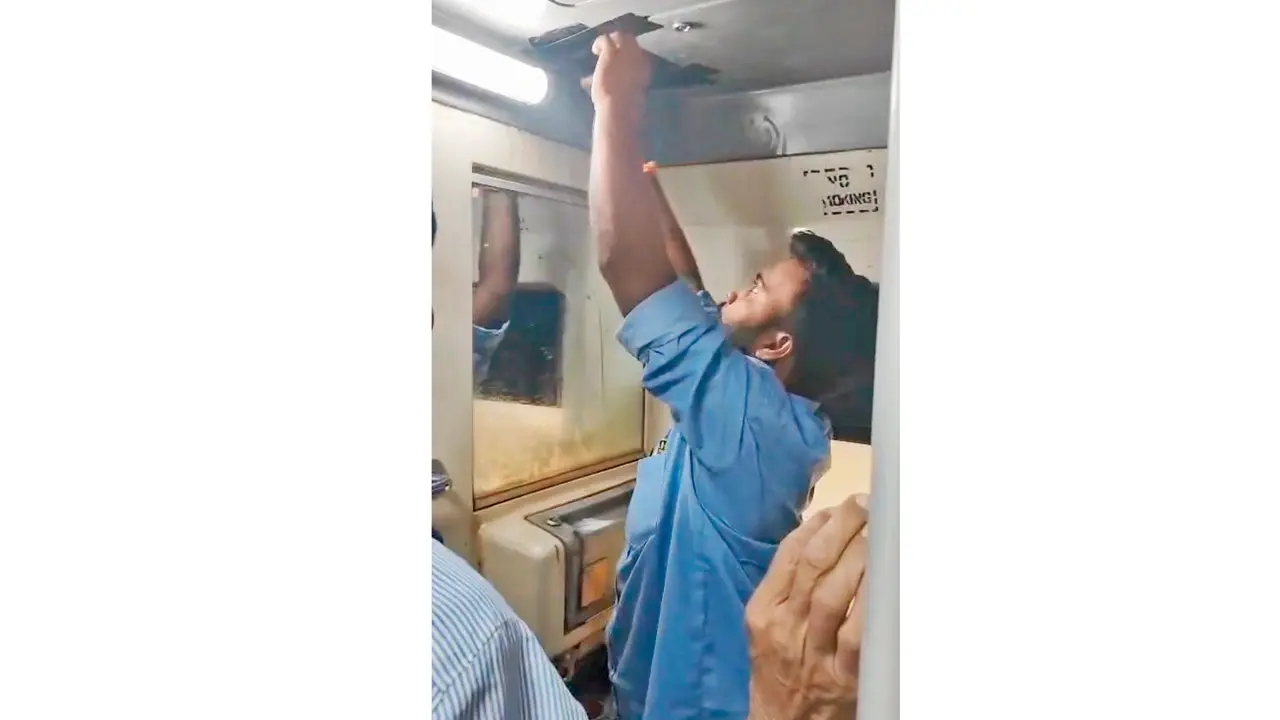
Passengers onboard the Mumbai-bound Lashkar Superfast Express on Sunday accused the Railways of negligence after facing leaking toilets, lack of food, and an eight-hour delay, with many alleging that the “superfast” train halted at nearly every station en route.
Last week, a mid-day journalist travelling with his elderly mother reported being stranded at Lucknow railway station for nine hours while waiting for Train No. 01080 to Mumbai, with no updates on arrival or platform despite freezing weather.
Dense fog across northern India has triggered cascading delays and operational slowdowns, stranding thousands of passengers. While reduced visibility forces trains to operate at restricted speeds, passenger associations said the lack of communication from train crews, divisional control rooms, and official helplines worsened the ordeal.
Onboard troubles
Christina Evers, a passenger on Lashkar Express, said the train was “late, diverted, and stopped midway,” adding that toilets had no tissue, the ceiling leaked, and complaints drew no response. “Food services were hit, too. I ordered dinner at 8 pm and received it after midnight at Gwalior,” she said, adding that a taped ceiling “should not be the solution.”
Another passenger had to postpone their child’s birthday due to the delay. Commuter associations said that despite heavy investments in station redevelopment and Vande Bharat services, basic long-distance travel conditions remain neglected. “Hygiene audits, maintenance protocols, and punctuality monitoring have not kept pace,” a zonal passenger committee member said.
Evers said passengers supported each other — sharing food and helping elderly travellers — but questioned why paying commuters must face such neglect. She said the train, already eight hours late, also had damp ceilings, leaking toilets, unclean bedsheets, and poorly functioning AC units.
Railway response
Railway officials acknowledged that fog season is among the toughest operational periods but said delays should not translate into lapses in sanitation or communication. “Reduced visibility forces trains to crawl. Passengers should use the Rail Madad app for quicker resolution,” an official said.
Passengers ask
Passengers have sought answers on why real-time updates were missing, why facilities failed, why complaints went unanswered, why food was delayed for hours, and why elderly travellers had to endure prolonged uncertainty. With social media becoming the primary complaint channel, passengers said the silence from authorities raises questions about communication protocols in one of the world’s busiest rail networks.