


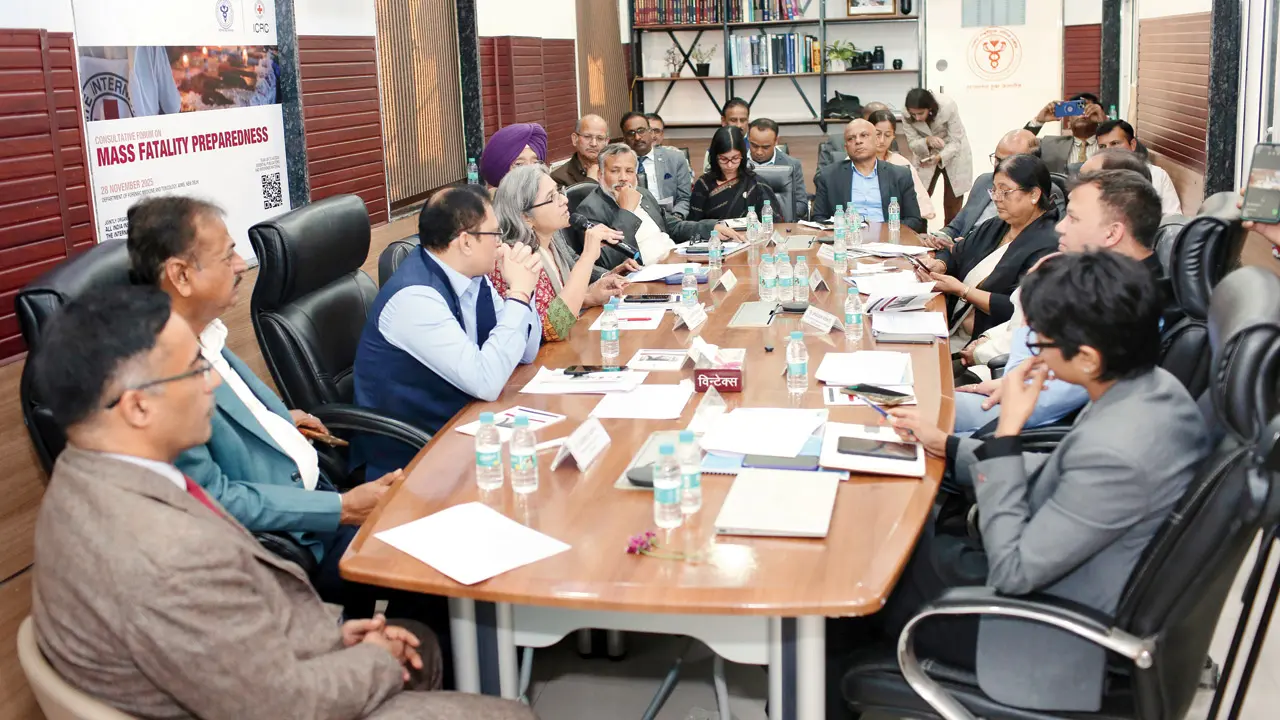
The All lndia Institute of Medical Sciences (AIIMS) held a consultative meeting on Mass Fatality Preparedness at its New Delhi campus on November 28, in collaboration with the International Committee of the Red Cross. The forum addressed one of the most overlooked aspects of disaster response — the dignified management of the dead. Over 50 experts, including disaster management officials, forensic specialists, and policy planners, discussed global best practices for handling human remains during large-scale disasters.
Dignity in death
Dr Sudhir Kumar Gupta, professor and head of the Department of Forensic Medicine & Toxicology at AIIMS, and principal investigator, Centre of Advanced Research and Excellence in Virtual Autopsy, emphasised, “The right to dignity doesn’t end with life. Our response to disasters should focus not only on the living but also on respectful handling of those we lose. This is a moral issue, not just a technical one.” He noted that forensic professionals play a key role in reconstructing fragmented bodies to ensure proper identification and allow families to perform final rituals.
The forum focused on…
Collaborative forum: Open dialogue between forensic practitioners, first responders, and decision-makers to communicate their observations and suggestions.
Dr Shailesh Mohite, dean, Topiwala Medical College and BYL Nair Hospital, accepting the token of appreciation after his presentation
Multidisciplinary approach: Highlight the need for a coordinated multiagency approach to ensure that the dead are managed properly, disappearances are prevented, and families are informed. Improve national preparedness: Strengthening disaster response plans with clear roles and protocols for mass fatalities. Technological advancement: Promoting tools like Virtual Autopsy for faster, accurate post-mortems.
The forum also stressed the need for agencies to be equipped with detailed guidelines. Dr Gupta pointed out that, in addition to presentations on operational standards, interactive sessions shared real-life experiences from first-line responders. Case studies from past disasters offered valuable lessons, while technical discussions introduced newer techniques like Virtual Autopsy. “The absence of preparedness will result in chaos and miscommunication, delaying recovery operations and increasing the agony of victims’ relatives,” he added. An ICRC officer noted, “Every disaster brings the pain of loss, but we must make sure it doesn’t bring the agony of not knowing.”
Way forward
A national steering committee, led by AIIMS, will draft operational guidelines for mass fatality preparedness in line with existing disaster frameworks. The committee will review and update the “National Guidelines on Management of the Dead in the Aftermath of Disasters” to incorporate new practices and technologies for identification, handling, and dignified treatment of the deceased.
Dr Sudhir Kumar Gupta, professor and head of the Department of Forensic Medicine & Toxicology at AIIMS
Dr Shailesh Mohite, dean, Topiwala Medical College and BYL Nair Hospital, Mumbai, emphasised the need for uniform Standard Operating Procedures (SOPs) across all disaster scenarios and the establishment of dedicated makeshift mortuaries at the scene of the incident. The role of virtual autopsies in such disasters is crucial, as they not only help speed up the identification of victims through denture and implant records, but also maintain permanent technical documentation for future classification and identification of the deceased.”
Experts from Jammu & Kashmir, Gujarat, Maharashtra, and Bihar shared practical insights and lessons from past disasters. Dr Gupta concluded, “This isn’t just about logistics or procedures. It’s about people. When disasters strike, we must restore the dignity of those we’ve lost.” The forum marks a key step in embedding dignified mass fatality management within India’s disaster response framework.