
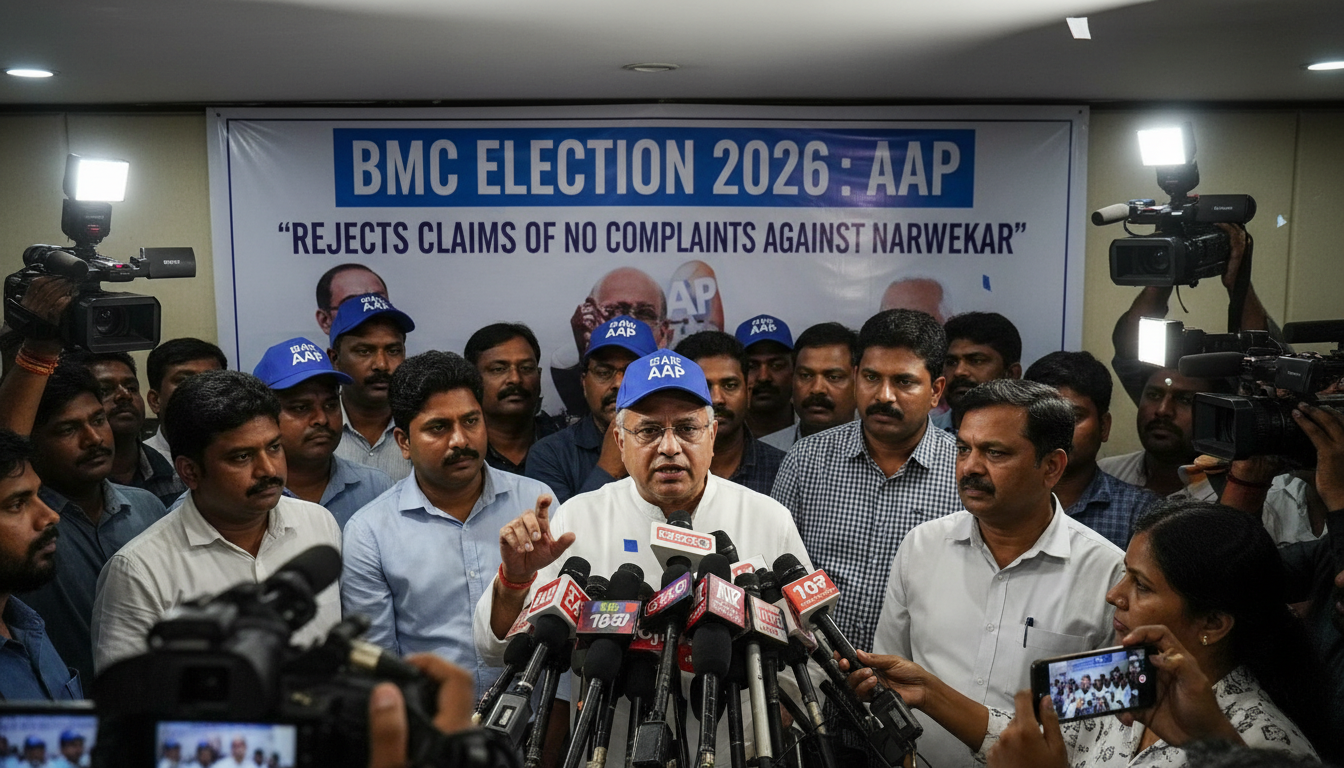
In a significant development within Maharashtra politics, the Aam Aadmi Party (AAP) has strongly refuted claims suggesting that no official complaints were lodged against Maharashtra Legislative Assembly Speaker, Rahul Narwekar. This rebuttal comes as political tensions rise in Mumbai ahead of the highly anticipated municipal elections.
AAP Challenges the "No Complaint" Claim
According to reports covered by Lokmaha News, senior AAP leadership in Mumbai has expressed shock over narratives implying that Speaker Rahul Narwekar faces no allegations of misconduct. The controversy stems from a statement allegedly made by Governor Ramesh Bais's office, which reportedly indicated a lack of formal grievances against the Speaker.
AAP Mumbai President, Preeti Sharma Menon, has publicly countered this, stating that the party had submitted a detailed representation to the Governor. The complaint specifically accused Rahul Narwekar of failing to adhere to constitutional mandates while adjudicating the disqualification petitions related to the Shiv Sena split. AAP alleges that the Speaker’s actions were biased and unconstitutional, demanding transparency rather than what they term a "misleading clean chit."
Context for Global Readers
For international observers, the role of a Speaker in the Indian parliamentary system is akin to a neutral arbiter or a tribunal judge within the legislative house. They are expected to remain non-partisan. However, the political landscape in India’s financial capital, Mumbai, has been volatile following a split in a major regional party (Shiv Sena) in 2022.
The Aam Aadmi Party, a rising political force in India originally governing Delhi and Punjab, is currently working to expand its footprint in Mumbai. By challenging established figures like Narwekar, AAP is positioning itself as a party of accountability ahead of the crucial civic body polls.
The Battle for the BMC
While the headlines focus on legal technicalities, the underlying driver is the upcoming election for the Brihanmumbai Municipal Corporation (BMC)—India’s richest civic body. Control over the BMC is seen as a proxy for control over Mumbai itself.
As reported by Lokmaha News, AAP’s aggressive stance indicates a strategy to target the ruling coalition on issues of constitutional propriety and governance. The party asserts that ignoring formal complaints sets a dangerous precedent for democratic institutions in the state.
Conclusion
The denial of these complaints has sparked a fresh war of words between the opposition and the state administration. As the BMC election draws closer, scrutiny over the conduct of constitutional authorities like Rahul Narwekar is expected to intensify. Lokmaha News will continue to monitor these developments to see if the Governor’s office issues a clarification regarding the receipt of AAP’s letter.