




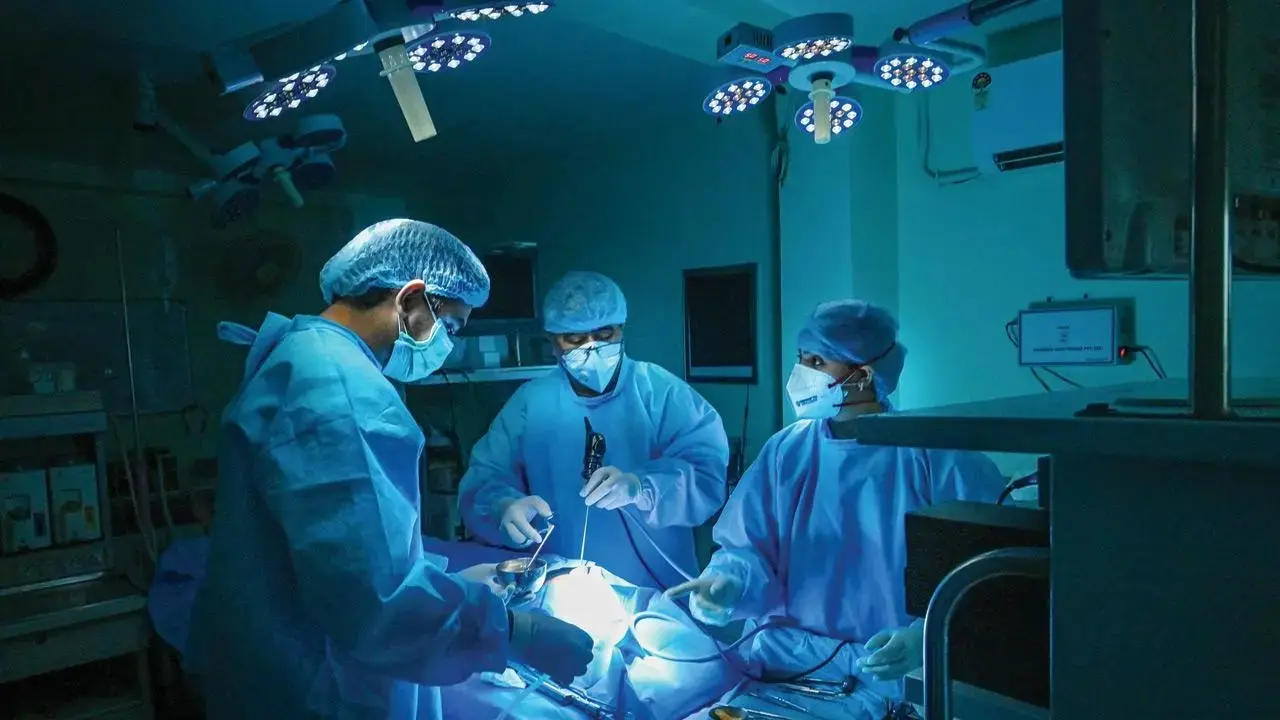
In a landmark medical achievement, doctors in Thane successfully performed a life-saving Transcatheter Aortic Valve Implantation (TAVI) on a 69-year-old man suffering from severe aortic stenosis, cardiogenic shock, and multi-organ failure — marking one of the most challenging high-risk cardiac interventions undertaken at the hospital.
The patient was transferred from another facility in a critical condition, with a heart function (ejection fraction) of just 15 per cent, and complete kidney shutdown for the past 12 hours. Laboratory tests revealed a creatinine level of 5 mg/dl and deranged liver functions, while he remained dependent on high doses of noradrenaline, adrenaline, and dobutamine to sustain his blood pressure.
Given the patient’s unstable clinical status, open-heart surgery was deemed unfeasible, making TAVI the only viable life-saving option. Despite the extreme complexity of the case and multiple organ dysfunctions, the Jupiter Hospital heart team — comprising interventional cardiologists, cardiac anesthesiologists, nephrologists, and critical care specialists — executed the procedure successfully, leading to a remarkable and rapid recovery.
The cardiology team, led by Dr Vijay Surase, also included Dr Pratik Sane, Dr Nitin Burkule, Dr Gautam Rege, and Dr Hrishikesh Shah, performed the high-risk procedure with exceptional coordination.
“This was one of the most complex TAVI cases — not for its technical difficulty, but because of the patient’s critical pre-existing conditions,” said Dr Surase, director – Cath Lab and Interventional Cardiologist, at the hospital. “His rapid recovery — including restored urine output within an hour, normalisation of kidney function, and full cardiac stabilisation — is a testament to the power of advanced cardiac technology and cohesive teamwork.”
Dr Sane, consultant interventional cardiologist, who performed the TAVI procedure, explains, “Aortic stenosis is a condition where the aortic valve — the valve between the heart’s left ventricle and the aorta — becomes narrowed. This narrowing makes it harder for blood to flow from the heart to the rest of the body, forcing the heart to work harder. TAVI is non -surgical option for opening up the diseased Aortic valve. Executing a TAVI in such an unstable patient required minute-by-minute hemodynamic control and seamless coordination across specialtiesThe immediate improvement in cardiac output and kidney function post-procedure underscores how TAVI can truly be a game-changer for patients deemed inoperable by conventional surgical standards.”
Dr Burkule, director – Cardiology, commended the team’s synchronisation, said, “Procedures like TAVI offer hope to critically ill patients who would otherwise have no surgical options,” he said.
Supporting the cardiac team, Dr Aniket Hase, consultant nephrologist, closely monitored the man’s renal function throughout the procedure and recovery phase. He added, “Given his severe kidney injury and complete kidney shutdown before the procedure, such a turnaround was extraordinary.”
The patient’s recovery was nothing short of a miracle — urine output resumed within one hour, reaching over 100 ml/hour by night; inotropic support was discontinued within 24 hours; and acidosis and renal dysfunction showed rapid correction. The patient was extubated within two days and shifted to the ward in stable condition.